
A better benchmarking method for service-business owners using call logs, conversion rate, booking speed, reviews, and best-month data.
Treat any number without a nearby source or stated method as a planning assumption, then replace it with your own records.
I was in an audit call with a roofing contractor in Nashville last spring. He'd pulled up his competitor's Google Ads, you can see the general shape of someone's ad spend with the right tools, and he was explaining why his numbers were down.
"They're spending twice what I'm spending," he said. "That's why they're getting more jobs."
I pulled up his own call log. February: 61% conversion rate. Last month: 38%.
Same market. Same ad spend. Same team. Twenty-three percentage points of difference, in his own data.
"What do you think your competitor's conversion rate is?" I asked.
He didn't know. Of course he didn't know. Nobody knows their competitor's conversion rate. That number is private, unknowable, and ultimately irrelevant.
"You don't need to know what they're doing," I said. "You already know what YOU'RE capable of. You did it in February. What changed?"
That's the question that actually matters.
The Problem with Competitor Benchmarking
Service business owners watch their competitors constantly. They look at Google Maps rankings, check review velocity, notice when a competitor's trucks are in their neighborhoods, monitor ad presence. This is understandable. Competitive awareness is not nothing.
But it becomes a problem when it replaces internal benchmarking, when owners use their competitor's perceived performance as the explanation for their own results.
The problem is structural. You don't know your competitor's: - Cost per acquired customer - Average job value - Conversion rate from lead to booked job - Profit margin - Employee turnover rate - Customer satisfaction rate - Actual ad spend vs. what the tools estimate
You're comparing your internal experience to their external performance. You're comparing your worst moments to their best advertising. And you're using a number you can't verify to explain a gap you can measure.
This is backwards.
Your Own Best Month Is the Only Benchmark That Matters
When I run a Revenue Leak Diagnostic, the first thing I do is pull three to six months of call log data and find the owner's own peak performance. Not industry benchmarks. Not competitor estimates. Their own best month.
Almost every service business has a best month in their recent history where multiple things went right at once: a staff member was on top of her game, the marketing channel was landing well, the seasonal demand was strong, the follow-up was getting done. In that month, the conversion rate was significantly higher than the current average.
That number, their own peak, is the benchmark. Because it's the one we know the business is actually capable of achieving. It's not theoretical. It's not an industry average. It happened.
The gap between February's 61% and last month's 38% isn't explained by competitor ad spend. It's explained by something that changed in the business. And unlike the competitor's budget, that's something we can actually identify and fix.
The Three Things That Drive the Gap
When I dig into the conversion drop with owners, it almost always traces back to one of three places.
First response time slipped. February had strong intake coverage, maybe the admin was particularly diligent, or call volume was lower and easier to manage. Last month, calls were getting returned in 3-4 hours instead of under 30 minutes. In home services, speed to lead is decisive, the first business to respond converts at a dramatically higher rate.
Follow-up on estimates went quiet. February was a month where the owner or admin stayed on top of outstanding estimates, called at 48 hours, texted at 72. Last month was busy, and follow-up got deprioritized. The estimates sat. Customers went with whoever checked in.
A specific intake failure. A staff change, a coverage gap, a week where calls were going to voicemail more than usual. One bad week of intake coverage can suppress a monthly conversion rate by 8 - 12 points.
In the Nashville roofing case, it was the third one. A key admin had been out for personal reasons for two weeks. The owner hadn't adjusted coverage. Call response time averaged 2.5 hours during those two weeks. The conversion data showed exactly when it happened, it wasn't even subtle once we looked at the daily breakdown.
That had nothing to do with his competitor's ad spend.
What the Own-Best-Month Benchmark Changes
When you shift from competitor benchmarking to own-best-month benchmarking, several things change.
The question changes. Instead of "how do I keep up with them?" the question becomes "what was different in my best month, and can I recreate it consistently?" One of these questions has an answer. The other is speculation.
The goal becomes achievable. If your best month was 61%, getting back to 61% is a reasonable operational target, because you've done it. If you're benchmarking against a competitor you can't verify, the target is infinite and demoralizing.
The cause becomes diagnosable. When you're looking at your own data over time, you can see exactly where performance changed. The date, the shift in conversion rate, the specific intake metric that moved. When you're focused on competitor behavior, you're looking at the wrong data set.
Three Business Owners Who Found Their Gap
The HVAC company in Toronto. Best month was April. Conversion rate: 64%. The following July, during peak season, it dropped to 41%. The owner thought the summer surge was just harder to convert, "people have more options in summer, they shop around more."
We pulled the July data. Call response time had ballooned to 4+ hours. Two of the peak weeks had 11pm-to-8am gaps in coverage. The July customer who called at 9pm and got voicemail booked with whoever answered. It wasn't that customers were shopping more in July. It was that coverage was worse.
Fixing the after-hours coverage brought conversion back above 60% in the next peak season.
The plumbing company in Columbus. Best month: 58% conversion. Current: 34%. Owner was convinced his pricing had gotten uncompetitive, everyone else was advertising lower prices.
We looked at estimate acceptance rate (separate from initial conversion). The owner was converting initial calls at 49% but only booking 30% of estimates sent. The gap was in follow-up. Estimates were going out and disappearing. We found 22 estimates over $500 that were more than 10 days old with no follow-up contact.
Not a pricing problem. A follow-up problem.
The garage door company in Charlotte. Best month: 71% conversion (high for this category, emergency response businesses convert better). Current: 52%. Owner had hired a new admin two months prior.
We pulled the call log by time-of-day. The new admin's shift covered 9am-5pm effectively. But conversion in the 5pm-9pm window, typically strong for garage door emergencies, had collapsed. The new admin wasn't handling after-hours routing correctly. No training gap. No performance issue. Just a process that hadn't been defined for the new hire.
Defined the after-hours handoff protocol. Conversion in that window recovered within three weeks.
How to Set Your Own-Best-Month Benchmark
You need three pieces of data to do this properly:
1. Your inbound lead count by month, how many calls, form submissions, and messages came in. If you don't have this broken out, your phone system's call log is the starting point.
2. Your booked jobs by month, how many of those inbound contacts became paying customers. Your CRM, invoicing software, or even your appointment calendar.
3. Your conversion rate by month, booked jobs ÷ inbound leads. Calculate this for the last six to twelve months and find your peak.
Once you have the peak, ask what was different about that month. Talk to whoever was handling intake. Look at the call log. Check if anything changed in staffing, coverage hours, or follow-up discipline.
Then ask: is that peak replicable consistently? What would have to be true for that month to be the new baseline?
That's the work. Not watching what your competitor is spending on ads.
The Competitor Whose Performance You Should Actually Track
What to check before you choose a fix
Before buying another answering service, chatbot, phone tree, or AI receptionist, look at the actual path a caller, website visitor, referral, past customer, or high-intent lead takes when they reach your business. The first question is not whether the tool sounds impressive. The first question is whether the buyer gets a clear next step while they still care. In service business operations, that usually means a fast answer, a useful question, a booked appointment or estimate path, and a follow-up record that does not rely on memory.
A strong system should make the business feel easier to choose. It should reduce the waiting, repeating, guessing, and manual chasing that make a buyer keep searching. If the current setup answers only during business hours, takes a message without qualifying intent, or leaves the follow-up to whoever remembers first, the problem is not only staffing. It is front-door design.
The week-one diagnostic
Run this review over the last seven days before making a decision. Pull the call log, website form submissions, chat history, booking calendar, CRM notes, missed-call list, and Google Business Profile activity. Do not start with opinions. Start with timestamps and outcomes. A small sample is enough to show whether the leak is response speed, qualification, booking friction, review weakness, or follow-up failure.
- Count every missed call and every call that lasted under 20 seconds. Those are often buyers who never became visible in the CRM.
- Count every form or chat that waited more than 10 minutes for a real next step. This is where high-intent demand starts cooling off.
- Mark every inquiry that needed a human callback before booking. That tells you whether the website is explaining the next step clearly enough.
- Review the last five reviews buyers can see publicly. Recency matters because buyers compare proof before they commit.
This is the source method for the article: use your own call log, CRM, booking calendar, form inbox, and Google Business Profile review activity. Public research can explain the pattern, but your own records show where money is escaping in this business.
Where the revenue usually leaks
The leak usually appears in one of four places. First, the buyer calls when the team is busy or closed. Second, the buyer reaches the business but is not qualified clearly enough to book. Third, the buyer receives a polite response but no firm next step. Fourth, the buyer finishes the job or visit but no review, referral, or reactivation path happens after the work is done. Each leak looks small by itself. Together, they decide whether marketing produces booked revenue or only more noise.
For a service business, the most valuable fix is the one that protects answered calls, booked appointments, stronger reviews, and follow-up. That is why stop comparing yourself to your competitor. compare yourself to your best month. should be judged by business outcomes, not by novelty. A phone feature that sounds clever but does not improve booked appointments is not enough. A website widget that collects contact details but does not trigger follow-up is not enough. A review tool that asks once and disappears is not enough.
What a stronger system should do
A stronger front door answers quickly, asks the right questions, captures the reason for contact, separates urgent from routine demand, books when rules are clear, sends confirmations, updates the follow-up path, and asks for reviews after the work is done. The system should make the owner less dependent on heroic callbacks and make the buyer feel that the business is organized from the first touch.
The Quiet Protocol treats this as an operating system, not a single widget. Calls, web forms, missed-call text-back, appointment booking, CRM handoff, review requests, and reactivation all need to point in the same direction. When those pieces are connected, a service business can capture more demand without turning the team into a bigger manual call center.
How to judge whether it is working
Do not judge the system by how futuristic it feels on day one. Judge it by what changes in the business. Useful measurements include missed-call recovery rate, average response time, booked appointment rate, no-show recovery, review request volume, review recency, reactivated past-customer conversations, and the number of leads that have a clear next action in the CRM.
The best early sign is calm. Fewer loose callbacks. Fewer mystery leads. Fewer buyers waiting for a reply. More conversations with a clear status. That is what good automation should feel like to the owner and to the customer.
The loss estimate is basic business math, not a magic claim.
Revenue-leak examples on this site are built from visible operating inputs: inquiry volume, missed-call or slow-response rate, booking rate, average job or client value, repeat value, and follow-up recovery. The fastest way to make the number real is to run the diagnostic for your closest business type, then compare it against your own call log, CRM, booking calendar, form timestamps, and review activity.
The practical questions behind this decision.
Is this just a 24/7 answering service?
No. A traditional answering service usually takes a message. A properly designed AI receptionist and front-door system captures intent, qualifies the buyer, routes the request, books when possible, triggers follow-up, and supports reviews after the work is done. Message-taking is coverage. Revenue capture is a fuller operating path.
What should a service business fix first?
Fix the first place buyers disappear. For some businesses that is after-hours calls. For others it is slow website follow-up, weak booking logic, old leads, or stale reviews. The right first move comes from the seven-day diagnostic, not from guessing.
Will AI make the business feel less human?
Bad automation feels colder than a person. Good automation feels like the business is paying attention. It answers quickly, uses plain language, collects the right information, and hands the buyer to a human when judgment or empathy is needed. The goal is not to remove people. The goal is to stop making buyers wait for basic next steps.
How fast should we expect improvement?
The first lift should come from visibility and speed: fewer missed opportunities and cleaner routing. Deeper gains come after the system has enough real conversations to tune scripts, booking rules, follow-up timing, and review requests. Treat the first month as deployment and calibration, not a magic switch.
Review the trust signals visible before someone decides to call.
The useful question is not only the star rating. It is whether recent proof supports the promise the website makes.

Vikram Roy is the founder of The Quiet Protocol, a Toronto-based systems firm serving service businesses across the Greater Toronto Area, Canada, and the United States. He works directly with professional firms, home service companies, dental practices, clinics, and local businesses to connect websites, customer intake, booking, reviews, follow-up, and practical AI into a clearer digital front door. All content is written from Toronto, Ontario. See the editorial method →
Inspect review recency, response habits, and the public trust signals buyers see before they contact the business.
See how the capability in this article fits into a complete customer journey.
Service BusinessesSee the same decision through the language, buyer behavior, and operating reality of this industry.
Client Results & ProofInspect the starting condition, installation, measurement window, and outcome behind real client work.
Carpet Cleaning Businesses Win on Speed. Here's Why Your Intake Is the Bottleneck.
A carpet cleaning field guide to missed calls, same-day booking, dispatch notes, CRM handoff, and follow-up when speed decides the job.

Commercial Cleaning Companies Win Bids They Never Close. Here's the Leak.
How commercial cleaning companies can close more walkthroughs and bids with faster follow-up, cleaner CRM notes, proof, and renewal-ready communication.
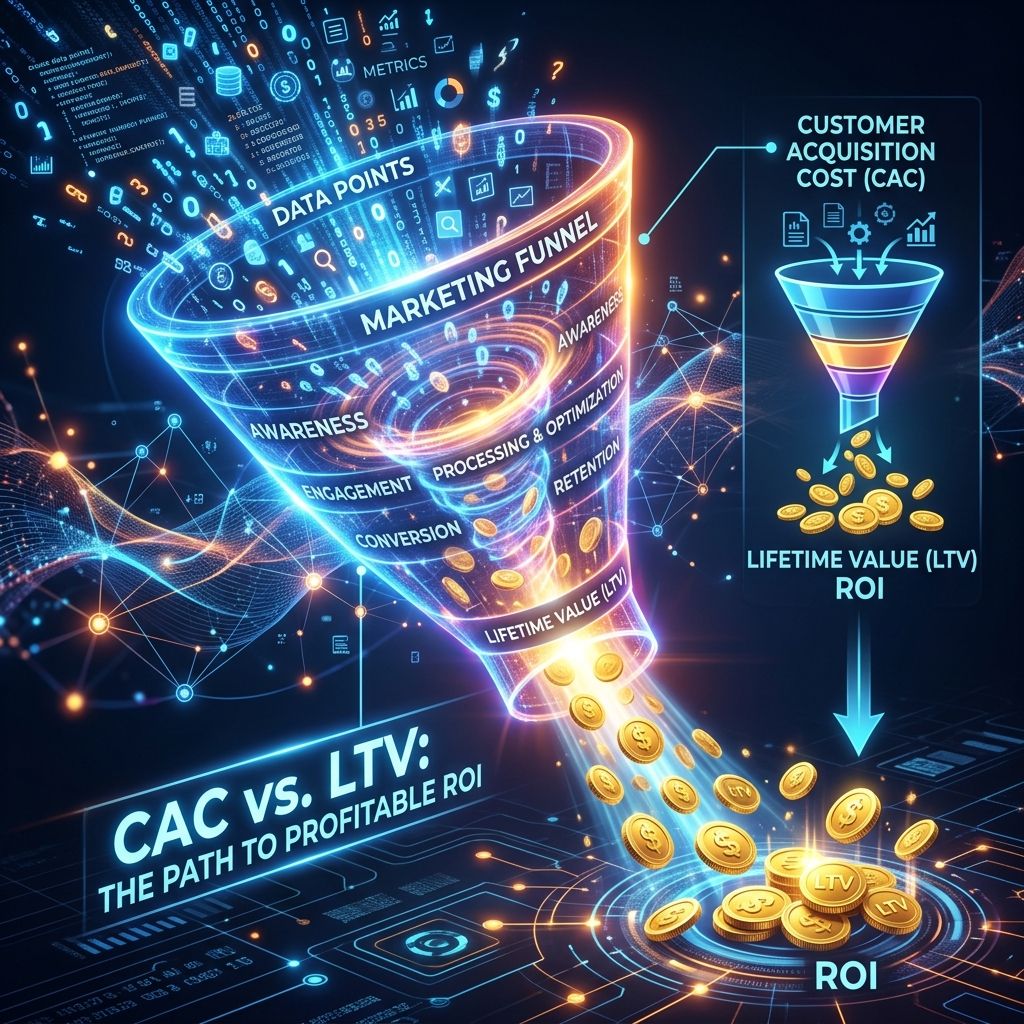
The Formula That Tells You Whether Your Marketing Is Actually Working
A practical CAC, LTV, call conversion, and review-driven ROI guide for owners who need to know whether marketing is really working.