
Why strong service-business operators grow quietly by improving AI receptionist coverage, website intake, CRM discipline, review capture, and follow-up.
There is a plumbing company in a mid-sized southeastern city that does about $3.4 million in revenue. They have seventeen employees. Their owner, David, has not posted on LinkedIn in eighteen months. He does not have a podcast. He is not at the trade conference talking about his journey.
He has 2,200 Google reviews averaging 4.9 stars. His lead-to-book rate is 71%. He gets seven to ten calls per week from other plumbing company owners asking how he runs his operation.
He is not loud. He is not visible in the ways we tend to associate with successful businesses in 2026. But he is untouchable in his market.
I have spent a lot of time over the past three years studying operators like David. And the thing that consistently separates them from the businesses that are always busy, always posting, always optimizing their Instagram -- but somehow never quite growing the way they expect -- is this:
They built the system first. Then they let the system be the business.
The Marketing-First Trap
The loudest advice in service business circles right now is about marketing. Run better ads. Build your personal brand. Post video content. Show up on Google. Build a referral network.
None of that advice is wrong, exactly. But it is downstream of a problem that most people are not addressing.
If your conversion rate is 32% and your competitor's is 68%, spending more on ads to get more leads into your funnel is an expensive way to stay in the same place. You are filling a leaky bucket with better water.
The service businesses that are growing quietly are not out-marketing their competition. They are out-converting them. And they are doing it through operational infrastructure that most of their competitors have not invested in.
When a lead calls a quiet operator's business, this is what happens: the call gets answered, every time, including Saturday at 9 PM and Sunday morning. The caller's information is captured and logged in real time. If they do not book, a follow-up sequence triggers within forty-eight hours. If they do book, a confirmation goes out immediately and a pre-appointment reminder fires the day before.
When a lead calls the business that is busy posting on Instagram, this is what often happens: the call goes to voicemail. Or reaches a stressed front desk person who is on another line. Or gets answered but not logged. Or gets logged but never followed up on.
Same lead source. Completely different outcome. The marketing could be identical. The operational infrastructure determines the result.
What "Compounding Quietly" Actually Means
The concept I want to introduce here is operational compounding.
When you build a system -- a real one, with CRM integration, automated follow-up, call intelligence, transcript analysis, and clean data -- that system gets better over time.
In month one, the system answers your after-hours calls and stops the bleeding. In month three, you review your first transcript analysis and discover that 40% of your callers are asking about one specific service that you have been underpricing. You raise the price. In month six, your CRM has clean data on 600+ contacts and you can segment by service type, geography, and call time to run a targeted reactivation campaign to your warm database. In month twelve, your team has access to 12 months of call intelligence showing which time slots book at the highest rate, which service types generate the most emergency calls, and which follow-up cadences close at what percentage.
That data is your moat. Nobody else has it. Your competitor who is busy posting content has better brand awareness. You have an operational advantage that compounds every month.
David, the plumber I mentioned at the start, has been running a full AI system for about twenty-two months. His database has over 4,000 customer contacts with clean, structured call history. He can look at any thirty-day period and tell you his lead-to-book rate by service type, by time of day, by day of week, and by geographic area. He uses that intelligence to make every operational decision: staffing, service area, pricing, promotions.
His competitor two miles away has a nice website and just launched a TikTok account.
Why They Stay Quiet
I want to address why you do not hear about these operators more.
Partly it is temperament. The owners who prioritize building systems over building personal brands tend to be a certain type: detail-oriented, somewhat private, focused on execution over narrative.
But there is a strategic reason too.
When you have genuine operational advantages -- conversion infrastructure, call intelligence, a database of 3,000 active customers -- you have no interest in broadcasting how you built it. The advantage only exists if your competitors do not replicate it. Quiet operators are quiet in part because talking about their system publicly helps their competition understand what to copy.
The content you see proliferating from the service business space -- the "how I grew to $1M" videos, the podcast episodes about marketing strategy, the LinkedIn posts about culture -- tends to come disproportionately from businesses in growth mode who are still figuring it out, or from businesses whose primary product is advice rather than services.
The operators who are genuinely printing money through operational excellence are usually too busy running their business to explain it to you on video. Which is probably part of why it works.
The Three Things Quiet Operators Do That Loud Operators Don't
I have looked at enough businesses across this spectrum to identify some consistent patterns.
They treat their phone system as a revenue infrastructure decision, not a cost. When a quiet operator evaluates an AI system, they do not ask "how much does it cost per month?" They ask "what is the cost of not having it per month?" They have usually done the math: missed calls, dead leads, late follow-up, unconverted estimates. The number is always larger than the software cost. The purchase decision is not agonizing.
Loud operators tend to see software as overhead. Quiet operators see it as infrastructure.
They invest in data before they invest in marketing. Before a quiet operator spends $5,000 on a PPC campaign, they want to know: what is their current conversion rate? Where are leads dying in their funnel? What is the cost per acquired customer from organic calls versus paid calls? They do not add lead volume to a leaky funnel. They fix the funnel, then add volume.
I see this constantly in audits. A business spending $8,000 per month on ads has a 28% lead-to-book rate. A business spending $1,200 per month on ads has a 67% lead-to-book rate because they invested in conversion infrastructure first. The second business is getting more revenue from less spend.
They optimize for lifetime value, not first transaction. Quiet operators know that a new customer's real value is not the first job. It is the relationship over five or ten years. They build systems that stay in contact after the job is done, that automate the touchpoints at 30, 60, and 90 days post-service, and that turn one-time customers into repeat clients who refer.
The loud operators are focused on acquiring the next new customer. The quiet operators are focused on maximizing the value of every customer they already have.
What This Looks Like as a Competitive Dynamic
Let me be direct about where this is heading.
In markets where one operator has been running a full AI system for eighteen months and the rest have not, the conversion gap is now significant. We are not talking about a marginal edge. We are talking about a structural difference in how leads flow through the market.
When a homeowner in a city has a plumbing emergency at 10 PM and calls three plumbers, the one with AI answers immediately, captures the lead, and sends a confirmation text. The other two go to voicemail. The homeowner books the one who picked up. This happens dozens of times per month in most markets.
Over eighteen months, that pattern means the AI-equipped operator has captured hundreds of leads that their competitors never knew they lost. Their review count is higher because they book more jobs. Their referral network is larger because they serve more customers. Their database is richer because they have more contacts.
The businesses that are still posting content and running ads to a leaky conversion funnel are not competing on a level field with the quiet operators anymore. They just do not know it yet, because the quiet operators are not telling them.
How to Start Building This Without Fanfare
Here is the thing about the quiet operator model: it does not require you to be invisible. It just requires you to prioritize the infrastructure over the content.
The sequence that works:
First, fix your conversion funnel. Find out what percentage of leads you are actually booking versus losing. If you do not know that number, find out before you spend another dollar on acquisition.
Then, build the system infrastructure. AI answering with CRM integration. Automated follow-up for unconverted leads. Confirmation and reminder sequences. Call recording and transcripts. A dashboard that shows you your actual conversion performance in real time.
Then, run the system long enough to accumulate data. Ninety days gives you your first usable intelligence. One year gives you a competitive asset that would take your competitor a year to replicate even if they started today.
Only then add marketing fuel. Now you are spending acquisition budget on a system that converts. Now the ads pay.
Most service businesses do this in the wrong order. They pour marketing spend into a system that cannot convert, wonder why growth is hard, and keep pouring. The quiet operators inverted the sequence. They built the machine before they turned on the fuel.
What Quiet Operators Measure First
The useful audit is not follower count. It is answered-call rate, form response time, booked-job percentage, review freshness, referral prompts, and how often the owner is pulled into routine admin. Quiet operators use those numbers to decide where AI receptionist systems, smart websites, review automation, and CRM workflows should go first.
The loss estimate is basic business math, not a magic claim.
Revenue-leak examples on this site are built from visible operating inputs: inquiry volume, missed-call or slow-response rate, booking rate, average job or client value, repeat value, and follow-up recovery. The fastest way to make the number real is to run the diagnostic for your closest business type, then compare it against your own call log, CRM, booking calendar, form timestamps, and review activity.
Decide what the AI must handle before you choose the software.
A useful intake system begins with the caller journey, the rules, and the human handoff, not a long feature list.

Vikram Roy is the founder of The Quiet Protocol, a Toronto-based systems firm serving service businesses across the Greater Toronto Area, Canada, and the United States. He works directly with professional firms, home service companies, dental practices, clinics, and local businesses to connect websites, customer intake, booking, reviews, follow-up, and practical AI into a clearer digital front door. All content is written from Toronto, Ontario. See the editorial method →
See the system page tied most closely to the problem this article is diagnosing.
Service BusinessesOpen the industry path where this revenue leak is framed in operational terms.
Run Revenue Leak DiagnosticQuantify the leak before you decide what type of system needs to be installed.
Call the AI Receptionist DemoHear the receptionist live, give it your business context, and test a short caller roleplay before you book.
Results & ProofReview what the system changes once the front door is rebuilt around response and continuity.
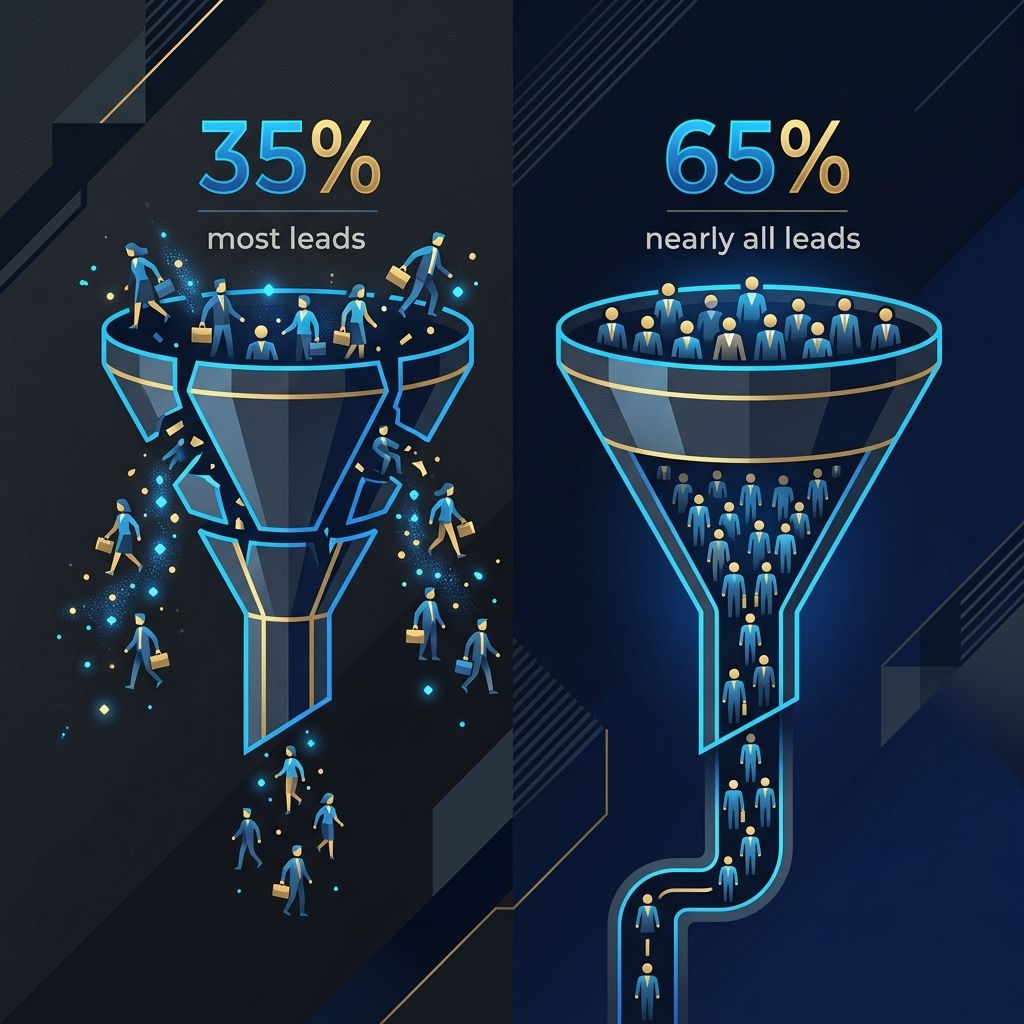
You're Converting 35% of Your Leads. The Top Service Businesses Convert 65%. Here's the Gap.
Most owners think they're converting 50, 60% of leads. The call log says 31%. Vikram Roy shows how to calculate your real number and close the gap.
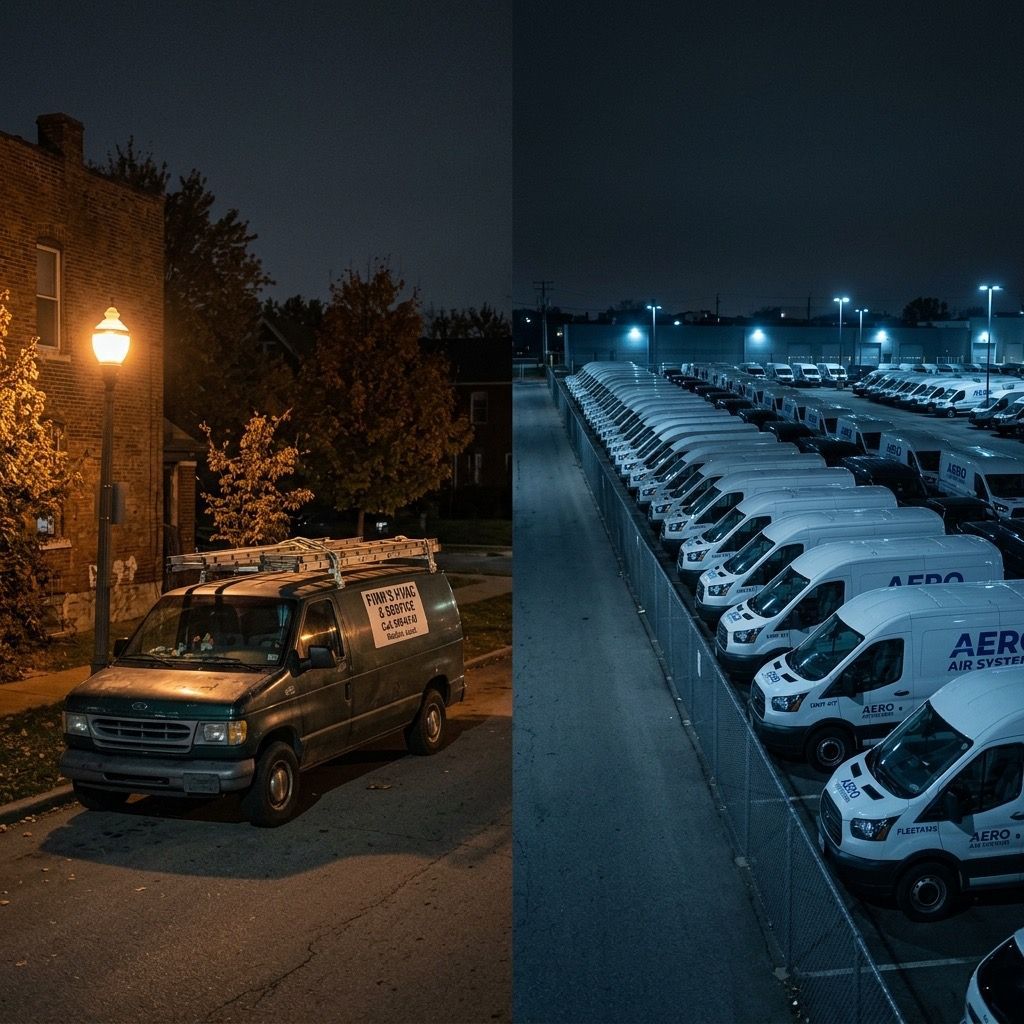
How Small Service Businesses Use AI to Compete Against Larger Operators
AI voice and intake tools have become the great equalizer for small service businesses. Here is how solo operators and small teams are using them to outperform franchises and regional chains.

The Service Business Revenue Stack: How Strong Operators Stop Leaks
The most successful service business operators in every market are not generating more leads than their competitors. They are losing fewer of them. Here is the complete revenue protection stack they have built.
Calculate the revenue leak.
Stop guessing. See how much demand your business may be losing through missed calls, slow replies, weak booking, review gaps, and follow-up drag, then decide whether AI Systems is the right system path.
Run the calculationPrefer to hear it first?
Call the live AI receptionist and test the conversation.
Call the live AI receptionist anytime. Tell it about service businesses, then hear a short live roleplay based on the calls your front desk actually gets.