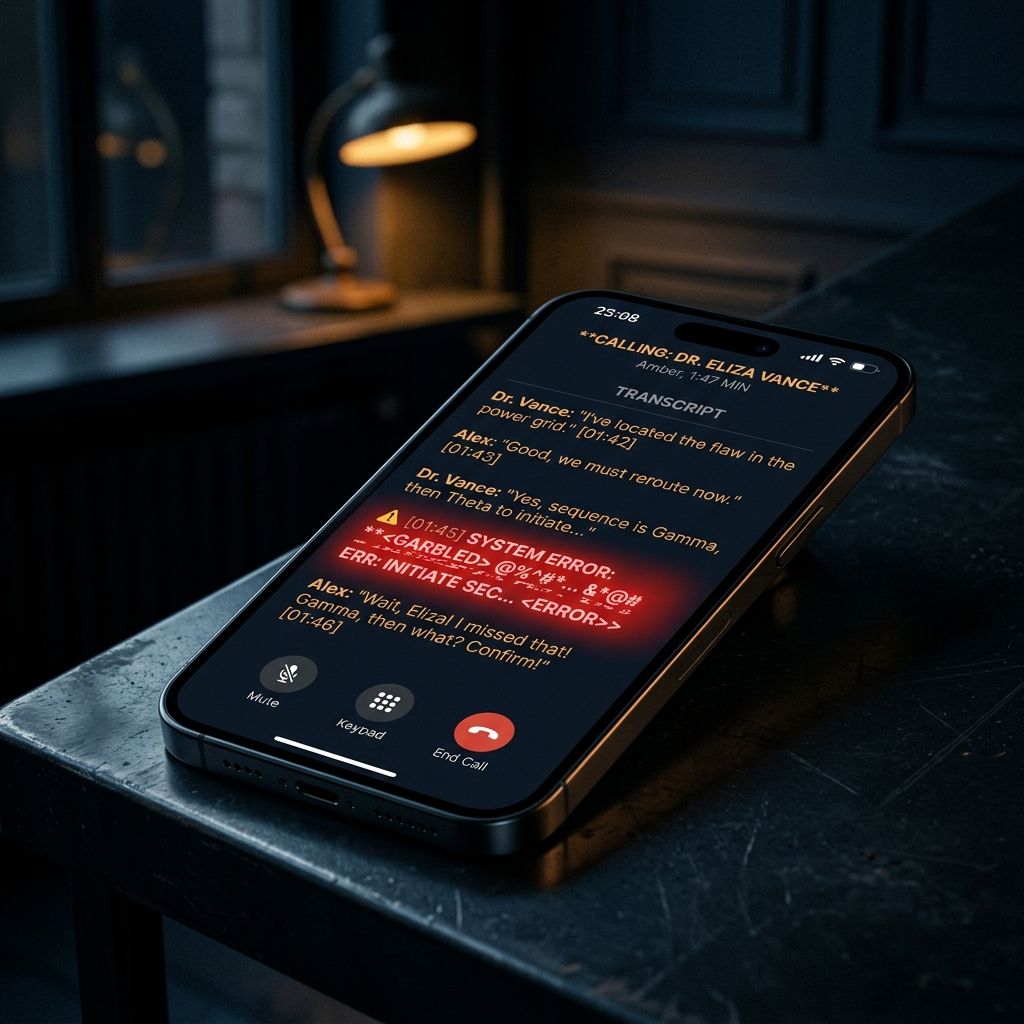
After a bad AI receptionist call, protect the caller before tuning the system. Pause or bypass the risky path, preserve the recording, transcript, messages, and downstream record, correct any booking or promise, classify the failure, repair one rule, retest the same scenario plus nearby cases, then monitor before returning to normal coverage.
This article links to 4 external sources beside the claims they support.
That order matters because a live customer problem is not primarily a prompt-writing exercise. It is a service-recovery event with a customer, an owner, evidence, a containment decision, and an exit condition. A fast apology with no record correction leaves the operation exposed. A quick prompt edit with no replay can create a second failure that looks unrelated.
This guide is for service businesses that already have an AI receptionist answering some calls and need a practical response when one goes wrong. If you are still evaluating a system, start with the separate pre-launch testing guide. It explains how to pressure-test the experience before real customers call. This page begins after a live or production-like failure has already happened.
The short answer: recover the customer, then repair the system
The first useful action is not to open the AI settings. Find out whether the caller still needs help, whether the business made an incorrect commitment, and whether a human needs to take ownership now. Give the caller one clear next step. Then preserve what happened before staff members edit notes, reschedule the appointment, or change the configuration.
The National Institute of Standards and Technology treats post-deployment monitoring, incident response, recovery, and change management, along with override and decommissioning, as operating responsibilities in its AI Risk Management Framework. A small business does not need an enterprise incident department to use that logic. It needs a named owner, a reliable record, a stop rule, and a controlled way to return the path to service.
Not every awkward call is an incident
Natural conversations include pauses, accents, corrections, background noise, incomplete sentences, and callers who change their minds. The standard should not be perfect imitation of a human. The standard should be whether the caller received a safe, accurate, and useful path without the business losing control of the commitment or record.
Harmless friction
The caller repeats a postal code, corrects a name, or asks the same question in a different way, but still reaches the correct outcome. Record the pattern if it happens often. It may deserve an experience improvement, but it does not automatically require the line to be removed from service.
Recoverable failure
The system misunderstands an important detail, books the wrong appointment type, sends an unclear message, or routes a call to the wrong team, but a human can still contact the caller and correct the record. The risky path should be contained until the business understands why the error occurred and proves the repair.
Stop-now incident
The system makes a material promise it cannot keep, mishandles an emergency, repeatedly loops, exposes inappropriate information, creates unsafe instructions, or continues contacting someone who has clearly declined. Bypass or deactivate the affected path immediately. Human coverage should take over until the exit conditions are met.
Six stages after a bad AI receptionist call
A good recovery process separates customer care from technical repair without losing the connection between them. The following six stages can fit on one incident record. Each stage asks what must happen now, who owns it, what evidence should exist, and what must be true before the business moves forward.
Six controlled handoffs from bad call to safe return
Protect the relationship first. Preserve what happened. Change only what the evidence supports.
- 01 · Protect caller
Does this person still need a useful human response?
Do nowAssign a named person to call, text, or email with context, acknowledge the problem, and provide one reliable next step.
Owner and evidenceCustomer recovery owner plus the time, channel, outcome, and any corrected promise or appointment.
Exit conditionThe caller knows what happens next and no urgent need is waiting inside the failed AI path.
- 02 · Preserve evidence
Can the team reconstruct what the caller experienced?
Do nowSave the recording, transcript, messages, call metadata, booking, record changes, routing result, and staff notes before editing them.
Owner and evidenceIncident owner plus one linked evidence set with timestamps and the customer-facing output.
Exit conditionA reviewer can replay the journey from first contact through the final downstream record.
- 03 · Contain path
What is the smallest risky route that should pause or bypass?
Do nowMove the affected intent, call type, schedule, transfer, campaign, or line to a verified human fallback without disabling unrelated safe paths.
Owner and evidenceOperations owner plus the containment time, affected scope, fallback destination, and coverage check.
Exit conditionNew callers cannot enter the known failure path and the fallback has been tested live.
- 04 · Correct record
What customer, booking, or team record is now wrong?
Do nowCorrect names, contact details, service type, urgency, consent, appointment, notes, promises, tasks, and routing status as required.
Owner and evidenceRecord owner plus the before-and-after values and any staff member notified of the correction.
Exit conditionThe customer and internal team are acting from the same accurate version of the next step.
- 05 · Repair and retest
What smallest proven cause can be changed safely?
Do nowRepair one instruction, knowledge answer, tool rule, routing condition, or handoff, then replay the incident and nearby variations.
Owner and evidenceSystem owner plus change note, test inputs, expected outputs, observed outputs, and unresolved limitations.
Exit conditionThe original failure no longer occurs and the repair has not broken adjacent high-risk cases.
- 06 · Resume and monitor
Has the path earned its way back into normal coverage?
Do nowRestore a limited scope, review early calls, keep human override available, and watch the failure class for recurrence.
Owner and evidenceLaunch owner plus return time, monitored sample, exceptions, escalations, and final review decision.
Exit conditionThe agreed monitoring window passes without a material repeat and ownership returns to normal operations.
Classify the failure before changing the system
A label should describe the customer or operational failure, not merely say that the AI was confused. Classification helps the team search for similar calls, choose the right owner, and avoid fixing the wrong layer. One incident can have more than one class, but there should be a primary failure that explains why the customer outcome became unsafe or unusable.
Wrong understanding
The system captures the wrong name, location, service, date, urgency, relationship, or reason for calling. The repair may involve confirmation language, clearer field capture, a knowledge boundary, or a route that sends uncertain details to a human before booking.
Wrong promise
The caller hears a price, availability, guarantee, service area, arrival time, eligibility statement, or outcome that the business did not authorize. Correct the customer-facing commitment first. Then locate whether the promise came from approved knowledge, generated wording, a stale page, or an overly broad instruction.
Conversation loop
The system repeats a question, ignores a correction, circles back after the caller answers, or cannot reach an exit. A loop is not just irritating. It can keep an urgent caller away from a human. Add a retry limit, escape phrase, and verified fallback rather than merely making the repeated question sound friendlier.
Failed escalation
The AI recognizes that a human is needed but the transfer, notification, on-call destination, or callback task fails. Test the receiving side, not only the AI side. A spoken promise to transfer is not a successful handoff unless the right person receives useful context and takes ownership.
Downstream mismatch
The conversation appears successful, but the calendar, customer record, pipeline, form, notification, payment request, or internal task contains the wrong information. This class is easy to miss because the audio sounds fine. Review what the operation received, not only what the caller heard.
Outbound and consent boundary
An inbound AI receptionist and an outbound AI-generated voice campaign do not carry the same operating assumptions. In its declaratory ruling, the Federal Communications Commission explains that AI-generated voices in outbound calls fall within the Telephone Consumer Protection Act's artificial or prerecorded voice restrictions, including consent, identification, disclosure, and opt-out requirements subject to the call and applicable exceptions. Do not treat that ruling as a blanket script for inbound answering. Have qualified counsel review outbound use. This is not legal advice.
Protect the caller before opening the configuration
Service recovery should sound like service, not a technical investigation. The person following up should already know the caller's name, reason for calling, what went wrong, and which promises are safe to make. Do not make the caller repeat the entire story merely because the team wants a cleaner diagnosis.
A useful opening is direct: ‘I reviewed what happened on your call. We did not give you the clear next step we should have. I am taking ownership now.’ Then state what is known, correct any inaccurate commitment, and offer the next action. If the business caused a missed appointment or urgent delay, the recovery owner should have authority to solve that operational problem rather than simply apologize.
Preserve the evidence before it changes
Evidence is not only the transcript. Transcripts can omit tone, timing, interruptions, background noise, or words the system heard incorrectly. Preserve the customer-facing experience and the records created after it. The purpose is not to collect everything forever. It is to hold enough reliable context for the business to recover, diagnose, retest, and learn under its privacy and retention policy.
Recording and transcript
Keep the recording when law and policy allow, the transcript used by the system, timestamps, language, detected intent, and any confidence or fallback event that is available. Note transcript errors separately so reviewers do not mistake generated text for an exact record of the call.
Customer-facing messages and promises
Save the confirmation, missed-call text, email, payment link, calendar invitation, or follow-up the caller received. A correct transcript does not prove the correct message was delivered. The actual customer-facing artifact determines what the business may now need to correct.
Booking, customer, and team records
Capture the calendar event, contact fields, service request, pipeline stage, assigned owner, notes, tasks, and notification result before correcting them. If a record changed more than once, preserve the sequence. That makes it possible to see whether the error began in the conversation or downstream.
Routing and delivery evidence
Record the destination the system attempted, whether the destination rang, whether anyone answered, which context arrived, and whether a fallback activated. A transfer can fail because of business-hour logic, an unavailable staff member, a full mailbox, a blocked number, or a disconnected integration.
Choose what to pause or bypass
Containment should be proportional. If one after-hours emergency route is broken, move that route to the on-call human while keeping a proven appointment-confirmation path active. If the whole knowledge source is untrustworthy or the line repeatedly makes uncontrolled commitments, wider containment is appropriate.
The NIST AI RMF Manage playbook recommends documented incident response, recovery, change management, backup processes, and criteria for bypassing or deactivating systems. For a service business, that means deciding the stop conditions before the next bad call, checking the human fallback, and recording exactly what scope moved out of AI coverage.
Correct the customer record before work continues
A wrong record creates a second failure after the first call ends. Dispatch may visit the wrong address. A clinic may prepare for the wrong appointment type. A law firm may route an intake to the wrong practice area. A customer may receive reminders for a booking that was never actually agreed.
Assign one person to reconcile the customer-facing commitment with the operational record. Correct the values, notify anyone already acting on them, and preserve an incident note that explains why the change occurred. The normal AI Receptionist experience should make ownership and escalation visible instead of leaving staff to compare disconnected inboxes.
Find the smallest cause you can prove
Avoid a vague conclusion such as ‘the model had a bad day.’ Trace the failure through the journey: what the caller said, what the system understood, which rule or knowledge it used, what action it attempted, what the receiving tool stored, and what the team saw. The smallest proven cause might be one confirmation step, one stale answer, one route condition, or one unavailable destination.
Do not change the prompt, knowledge base, transfer rules, and booking logic at the same time unless the path must be rebuilt. Multiple simultaneous changes make the repair hard to verify. They also make it harder to explain a new failure if the next call behaves differently.
Retest the incident and its neighbors
Replaying the exact call is necessary but insufficient. A narrow repair can pass the incident and break a nearby variation. If the system confused a city name, test the original pronunciation, a correction, a nearby city, an out-of-area caller, background noise, and a caller who refuses to repeat the address. If a transfer failed, test answered, unanswered, busy, closed, and no-context destinations.
- Reproduce the failure. Use the same intent and the closest practical input. Confirm the team can make the old path fail before claiming the cause is known.
- Apply one controlled repair. Document the instruction, knowledge, route, destination, or downstream mapping that changed.
- Replay the original case. Compare the caller-facing words, action, stored record, notification, and human handoff against written expectations.
- Test nearby cases. Use ambiguity, correction, silence, interruption, after-hours timing, invalid information, and human escalation where relevant.
- Record unresolved limits. If the system still needs a human for a class of calls, make that a designed boundary rather than a hidden weakness.
You can hear the public AI receptionist demo to understand the customer experience, but your own acceptance tests must reflect your services, schedules, policies, locations, and escalation rules. A generic demo cannot prove a business-specific path.
Decide whether the AI returns to service
Return is a business decision, not merely a successful test call. Define the exit condition when the incident is opened. At minimum, the caller must be recovered, the record corrected, the risky path contained, the cause understood well enough to repair, the original and adjacent scenarios passed, and the receiving human fallback verified.
Resume gradually when the consequence is material. Start with a limited schedule, intent, location, or call type. Review early calls promptly. Keep a human override available. If the same material failure returns, the path has not earned normal coverage and should move back to containment.
Run a weekly failure review that changes the operation
A weekly review should not become a collection of funny transcript moments. Review incidents that affected customer outcomes, created wrong records, triggered human escalation, or exposed a recurring limitation. Invite the person who owns customer recovery, the person who understands the call path, and the person responsible for the receiving operation.
- Start with the customer impact. What did the caller need, what did the business do, and is any consequence still open?
- Review the complete path. Audio, transcript, messages, records, routing, notifications, and staff actions should tell one consistent story.
- Separate pattern from anecdote. Search for similar intent, route, schedule, language, and downstream failures before deciding the incident is isolated.
- Approve the smallest next change. Name the owner, test cases, due date, containment state, and return condition.
- Close the loop. Confirm customer recovery, record correction, repair evidence, monitored return, and any documentation or staff training update.
Measure reliability without inventing an industry benchmark
Use your own call volume, service mix, and consequence levels. A dental practice, restoration company, accounting firm, and law office do not share the same tolerance for delay, ambiguity, or incorrect routing. Counts and rates become useful only when the team can explain what is included and what action a change should trigger.
- Incidents by failure class and path: understanding, promise, loop, escalation, downstream record, consent, or another locally defined class.
- Time to customer recovery: from detection to a useful human response and corrected next step.
- Time to containment and repair: how long callers remained exposed and how long the path stayed outside normal coverage.
- Overrides and escalations: how often a human took over, why, whether context arrived, and whether the transfer succeeded.
- Repeat failures after change: whether the same class recurred during the monitored return window.
- Reported errors or complaints: what customers and staff reported, the response time, the response type, and whether the issue was resolved.
The NIST AI RMF Measure playbook recommends maintaining histories and audit logs, documenting errors and complaints, tracking overrides and escalations, and measuring the timing and quality of responses. Those practices support accountability. They do not supply a universal target rate for your business.
Know when a human should remain the default
Some calls deserve a human by design. The boundary may depend on emergency risk, regulated advice, emotionally sensitive situations, complex pricing, unusual accessibility needs, identity uncertainty, disputes, complaints, or a commitment only a manager can authorize. An AI receptionist can still capture minimal context and reach the right person without pretending to finish the conversation.
The decision is not AI versus people in the abstract. It is which parts of this customer journey can be handled accurately, safely, and usefully at this stage. The comparison in AI Receptionist vs. Human Receptionist can help owners choose the role of each without treating either option as universally superior.
Know where standard AI ends and custom intake begins
A standard AI receptionist can answer common questions, capture contact details, handle a defined booking path, and escalate within clear rules. Complexity rises when the business needs conditional qualification, multiple locations, different services, exception handling, regulated boundaries, on-call schedules, complex pricing, connected campaigns, or a human handoff that changes by context.
That broader path belongs in a scoped Custom Conversion System, where strategy, copy, intake logic, routing, integrations, acceptance tests, and continuing improvement are defined around the business. The Quiet Platform provides the shared operating layer. The custom engagement designs and maintains the parts that cannot be safely reduced to a standard setup.
A practical incident record
The incident record should be short enough to use and complete enough to make a decision. A long narrative with no owner is less useful than a concise record that connects the caller, consequence, evidence, containment, repair, tests, and return decision.
- Incident identity: date, time, affected path, customer record, severity, status, and primary failure class.
- Customer impact: what the caller needed, what went wrong, which commitment or record changed, and who owns recovery.
- Evidence: recording, transcript, customer messages, downstream records, route delivery, staff notes, and relevant configuration version.
- Containment: what paused or bypassed, when, fallback destination, coverage test, and who may restore it.
- Repair and verification: proven cause, controlled change, original replay, adjacent tests, limitations, and result.
- Return decision: scope restored, monitoring owner, review window, repeat threshold, and closure approval.
If you need help deciding whether your current call path is a standard setup or a custom operating problem, book a Systems Review. If you first want to estimate where response, booking, follow-up, and reactivation gaps may be costing the business, use the Revenue Leak Diagnostic.
Sources and limitations
- NIST AI Risk Management Framework Core: Govern, Map, Measure, and Manage functions. Used for post-deployment monitoring, incident response, recovery, override, decommissioning, change management, and clear role ownership.
- NIST AI RMF Manage playbook: risk response and recovery guidance. Used for containment criteria, backup processes, documented incidents, root-cause review, and controlled return to service.
- NIST AI RMF Measure playbook: measurement and audit guidance. Used for audit histories, reported errors or complaints, overrides, escalations, and response measurement.
- Federal Communications Commission: AI-generated voice declaratory ruling. Used only for the outbound AI-generated voice boundary described above, not as a blanket rule for inbound receptionist calls.
This guide provides operational education, not legal, privacy, security, medical, or compliance advice. Requirements vary by location, industry, call purpose, data type, and communication channel. The Quiet Protocol does not claim that any AI receptionist can be made failure-free. The goal is a system whose boundaries, owners, evidence, fallbacks, and recovery decisions are visible enough to operate responsibly.
The practical questions behind this decision.
Should we turn off the AI receptionist after one failure?
Not automatically. First classify the consequence and affected scope. A harmless correction may only need monitoring. A wrong promise, unsafe instruction, repeated loop, failed emergency escalation, or unreliable knowledge source may justify immediate containment. Pause the smallest risky path you can isolate, but use a wider bypass when the cause or boundary is unclear.
Who should call the customer back after a bad call?
The person with enough authority and context to provide a reliable next step. That may be an office manager, dispatcher, intake coordinator, clinician, attorney, or owner. The customer should not be transferred through several people while the business diagnoses its own system. Assign one recovery owner and record the outcome.
Should we tell the caller that AI made the error?
Be honest without making the technology the caller's problem. Explain what the business got wrong, what has been corrected, and what will happen next. Avoid blaming a vendor, a model, or the caller's accent. The business owns the experience it put in front of the customer.
How long should we retain the recording and transcript?
There is no universal answer in this guide. Recording, consent, privacy, security, employment, health, legal, financial, and industry rules can affect retention. Define a written policy based on applicable law, business need, access controls, and qualified legal advice. Preserve incident evidence under that approved policy rather than keeping every artifact indefinitely.
Can the AI place an outbound recovery call?
Do not assume an inbound relationship automatically authorizes an AI-generated outbound voice call. The FCC ruling cited above addresses artificial or prerecorded voice restrictions for outbound calls, including consent and disclosure obligations subject to the specific call and exceptions. Use an approved human or messaging path until counsel and your compliance process confirm the outbound design.
What if the AI worked but the transfer destination failed?
Treat it as a failed escalation. Preserve the call and delivery evidence, test the destination, verify business-hour and on-call logic, and confirm what context reaches the human. The AI saying ‘I will transfer you’ is not the completed outcome. The receiving person must actually receive, understand, and own the call.
Does one bad call mean we need a custom system?
Not necessarily. A configuration mistake or stale answer may be straightforward. A custom system becomes more likely when the failure exposes business-specific qualification, routing, multi-location logic, unusual exceptions, complex knowledge, regulated boundaries, or recurring campaigns that a standard path cannot represent safely. Scope follows operational complexity, not the emotional intensity of one call.
How do we know the repair is safe enough to relaunch?
Set the exit conditions before testing. Recover the customer, correct the record, contain the known route, reproduce the problem, repair the smallest proven cause, pass the original and adjacent scenarios, verify the human fallback, and monitor a limited return. Safe enough means the agreed evidence supports a controlled business decision, not that the system can never fail again.
Decide what the AI must handle before you choose the software.
A useful intake system begins with the caller journey, the rules, and the human handoff, not a long feature list.

Vikram Roy is the founder of The Quiet Protocol, a Toronto-based systems firm serving service businesses across the Greater Toronto Area, Canada, and the United States. He works directly with professional firms, home service companies, dental practices, clinics, and local businesses to connect websites, customer intake, booking, reviews, follow-up, and practical AI into a clearer digital front door. All content is written from Toronto, Ontario. See the editorial method →
Give the receptionist a realistic scenario and hear how it answers, gathers context, and moves the caller toward a useful next step.
See how the capability in this article fits into a complete customer journey.
Service BusinessesSee the same decision through the language, buyer behavior, and operating reality of this industry.
Client Results & ProofInspect the starting condition, installation, measurement window, and outcome behind real client work.
Carpet Cleaning Businesses Win on Speed. Here's Why Your Intake Is the Bottleneck.
A carpet cleaning field guide to missed calls, same-day booking, dispatch notes, CRM handoff, and follow-up when speed decides the job.

Commercial Cleaning Companies Win Bids They Never Close. Here's the Leak.
How commercial cleaning companies can close more walkthroughs and bids with faster follow-up, cleaner CRM notes, proof, and renewal-ready communication.

The Formula That Tells You Whether Your Marketing Is Actually Working
A practical CAC, LTV, call conversion, and review-driven ROI guide for owners who need to know whether marketing is really working.
Calculate the revenue leak.
Stop guessing. See how much demand your business may be losing through missed calls, slow replies, weak booking, review gaps, and follow-up drag, then decide whether AI Receptionists & Intake Agents is the right system path.
Run the calculationPrefer to hear it first?
Call the live AI receptionist and test the conversation.
Call the live AI receptionist anytime. Tell it about service businesses, then hear a short live roleplay based on the calls your front desk actually gets.